

Hilleberg tents in the rain: our experience with the seams of the Saivo 4, Kaitum 4 and Soulo BL
In 2026 we bought three new Hilleberg tents. With all three, water came through some of the seams in the rain. Here we tell you what we experienced, how Hilleberg responded and what you can do if your tent drips at the seams.
Saivo 4: drips at the seams, already in the garden
We bought the Saivo 4 in early 2026 and pitched it in our garden so that our daughter could take her midday naps in it and get used to the tent. As early as February and March, water dripped in through the seams at the front whenever it rained during those naps. In the middle of the day, during a short nap: that was not condensation.
We sent the tent to Hilleberg. The first reply said it was just condensation. Chris followed up, because after many nights in tents we know condensation pretty well. Hilleberg then acknowledged the problem, sealed the seams with Seam Seal and found that it affected the production batch, not just our tent. According to Hilleberg, the leaks at the corners affect Saivo outer tents in general, and this is to be fixed in the next production run. From that run we are to receive a new outer tent that no longer needs Seam Seal. That was about nine months ago; as of November 2026 we have not received it yet, and we will follow up in January. As compensation, Hilleberg also gave us Black Label poles, which we used on our Allak 3 for the first time on Senja in summer 2026. Fortunately, since Hilleberg sealed the seams, our Saivo 4 has stayed dry, including at Grövelsjön, on Seiland and in Scotland.
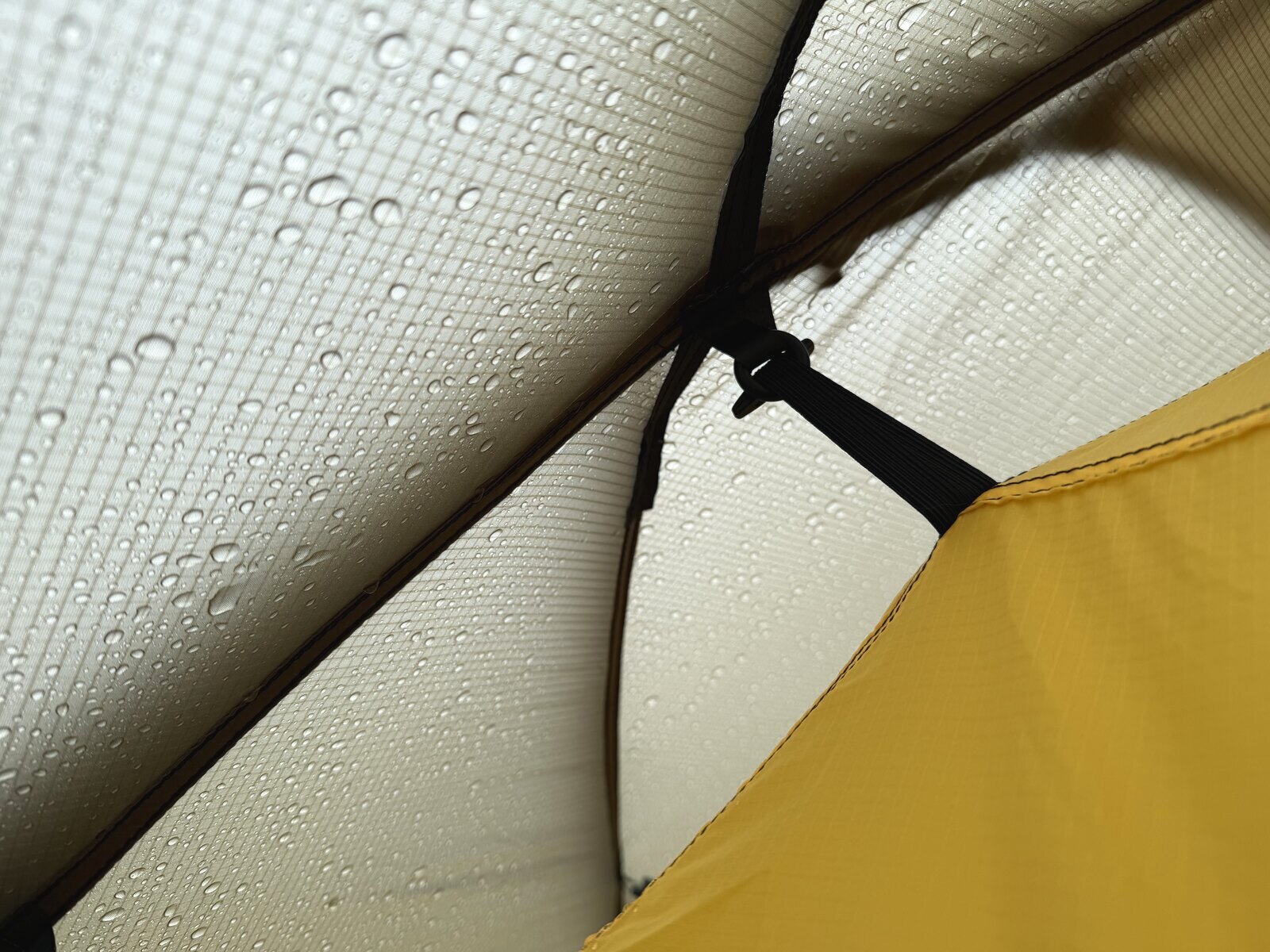
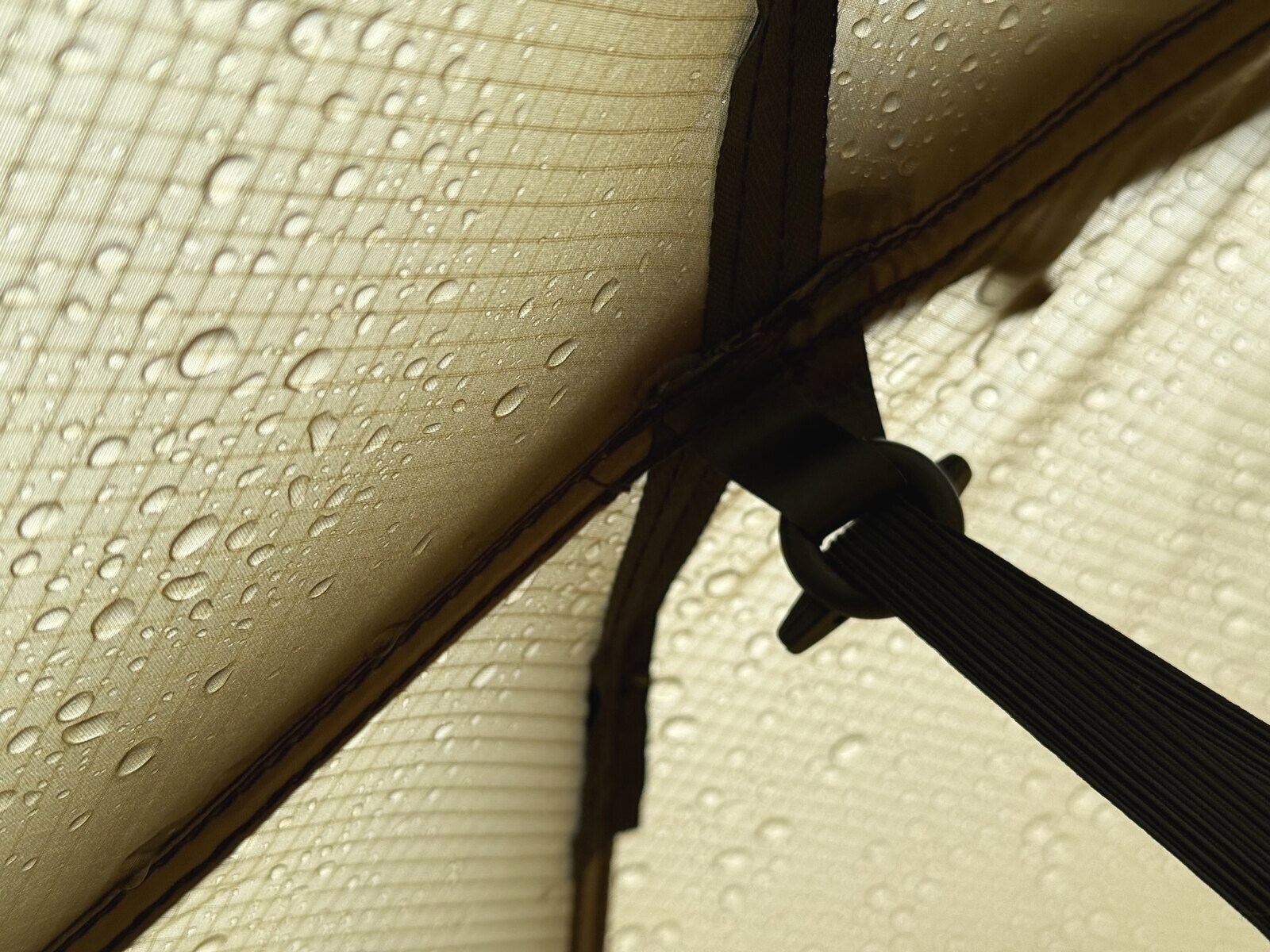
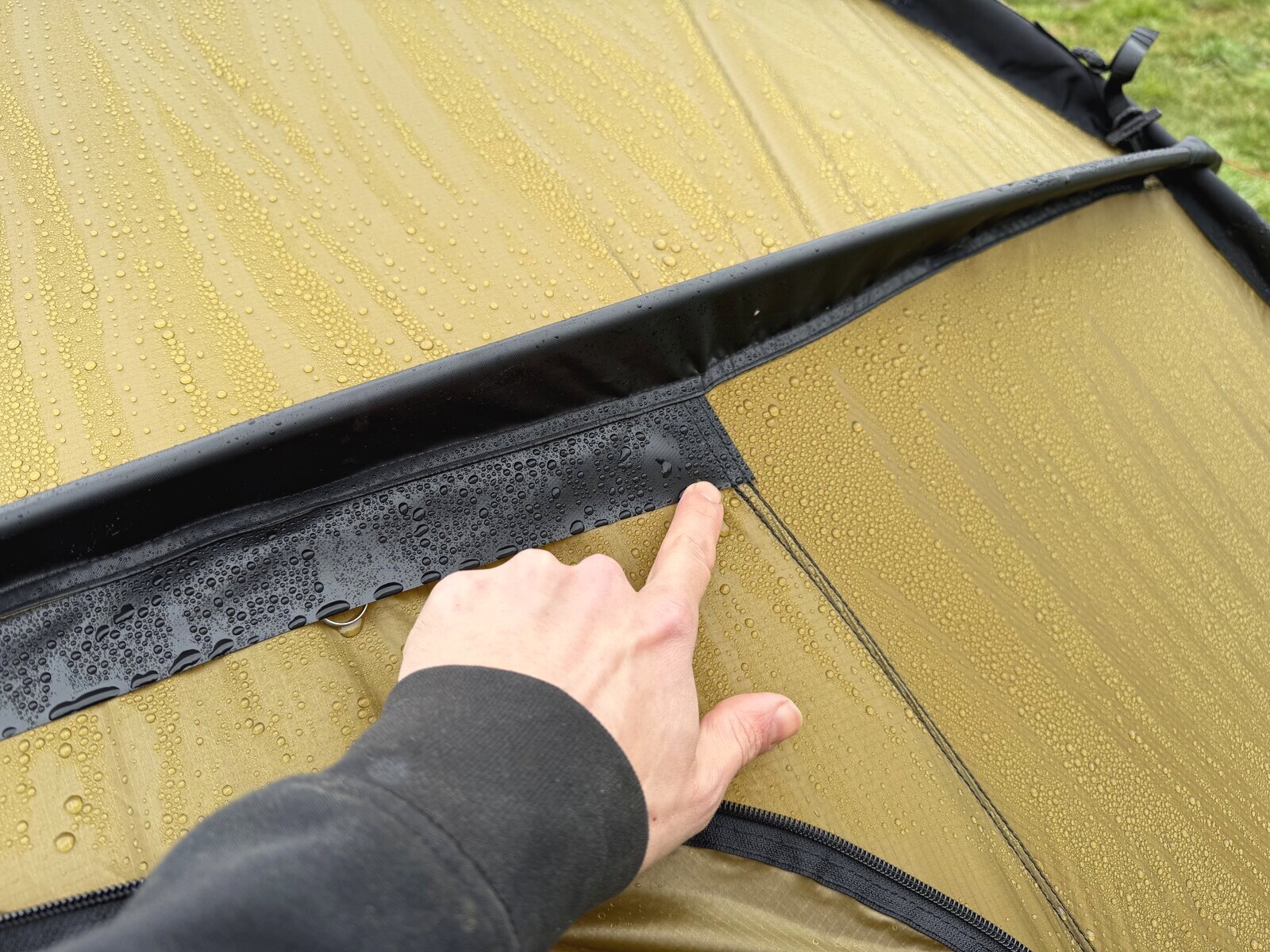
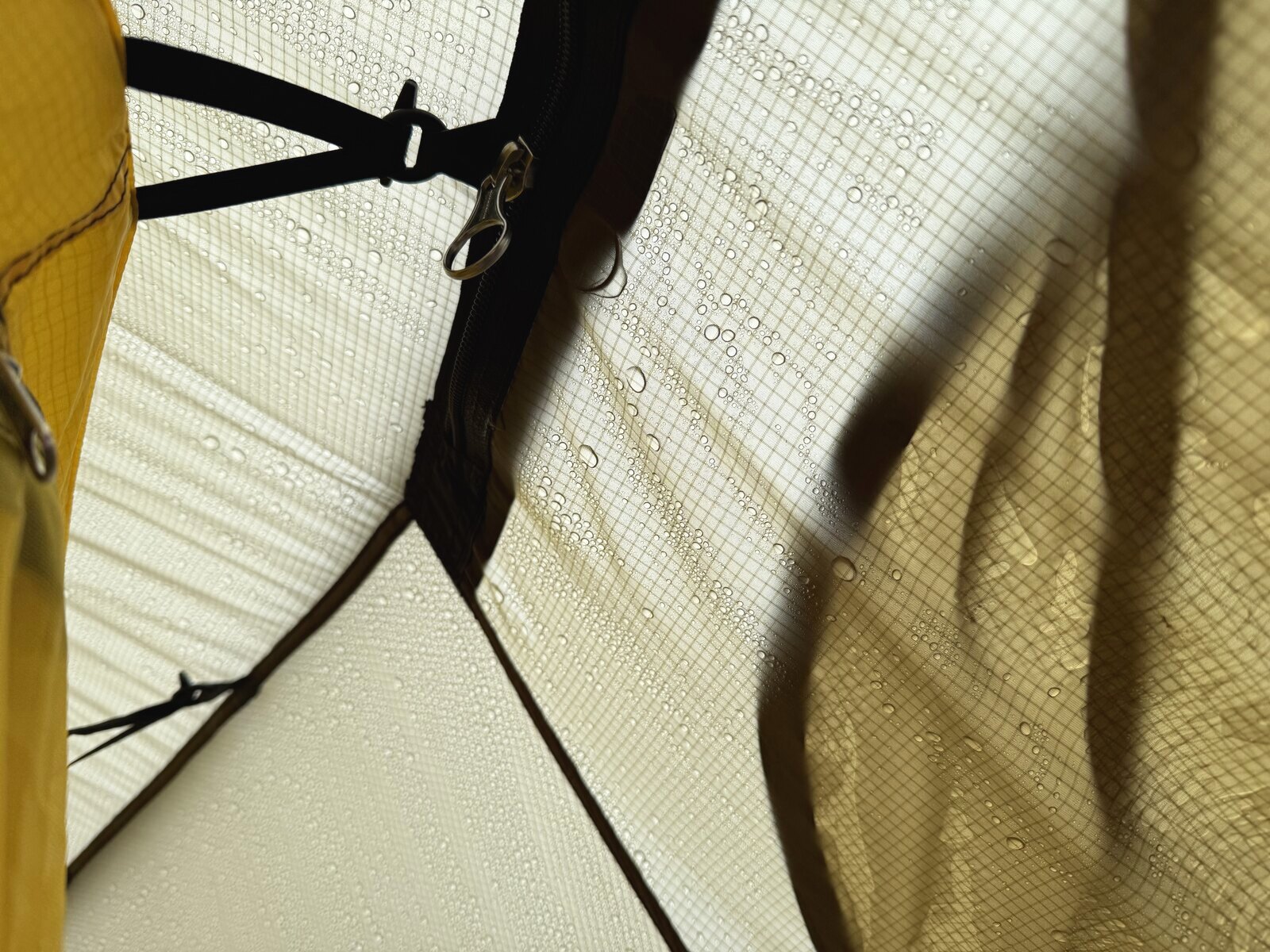
Kaitum 4: the replacement dripped too
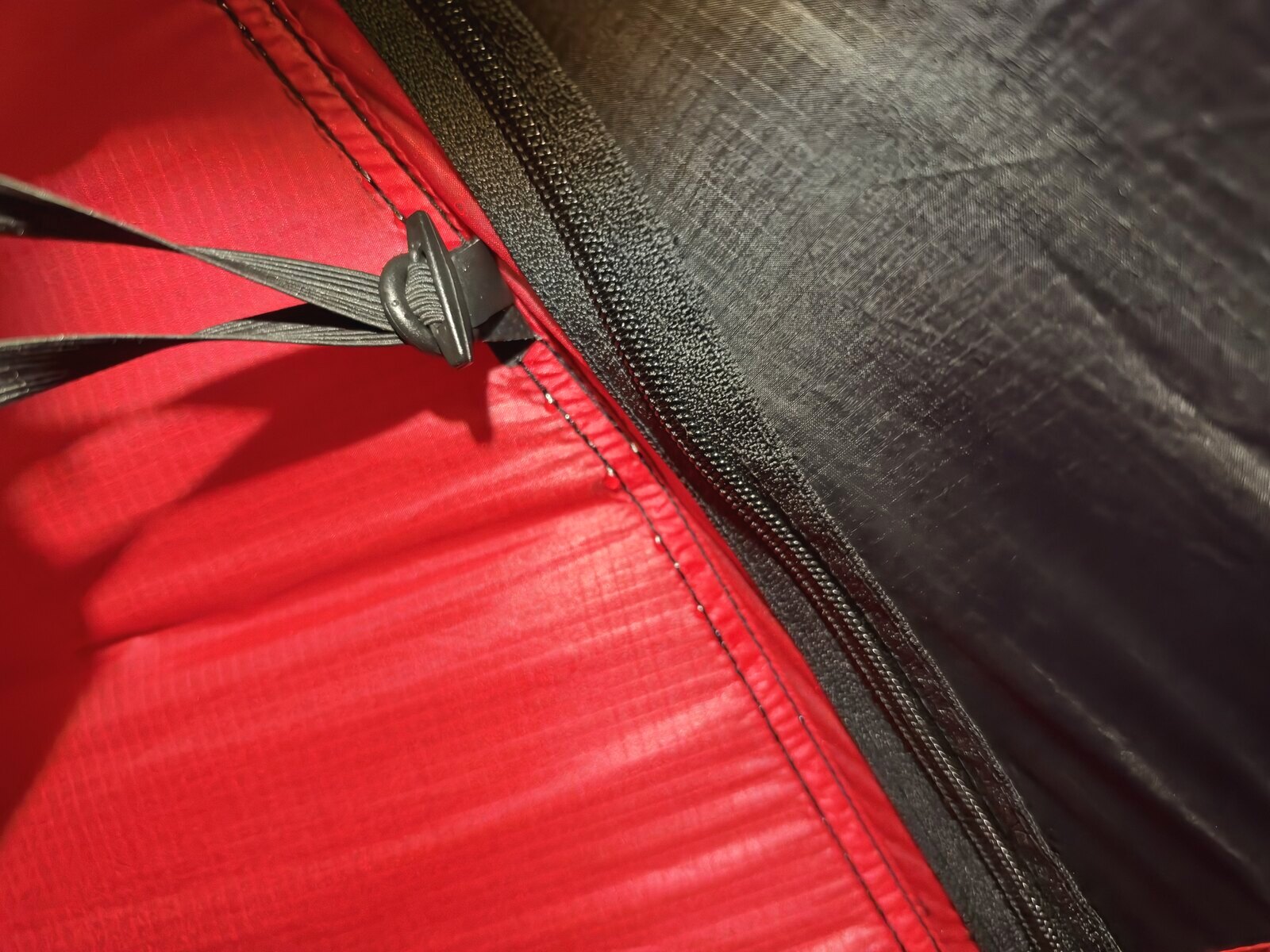
We bought the Kaitum 4 shortly before our trip to Scotland and did a test pitch in the garden in the rain in September 2026. Water came through in several places: the photos show droplets along the seams, at the pole sleeve, next to the door zip and on the vestibule floor right under a seam.
Hilleberg sent us a new tent straight away. We had no time to test it before the holiday and took it straight to Scotland. That tent leaked again too. Hilleberg offers to seal the seams. We would rather have a tent that is watertight from the start, though.
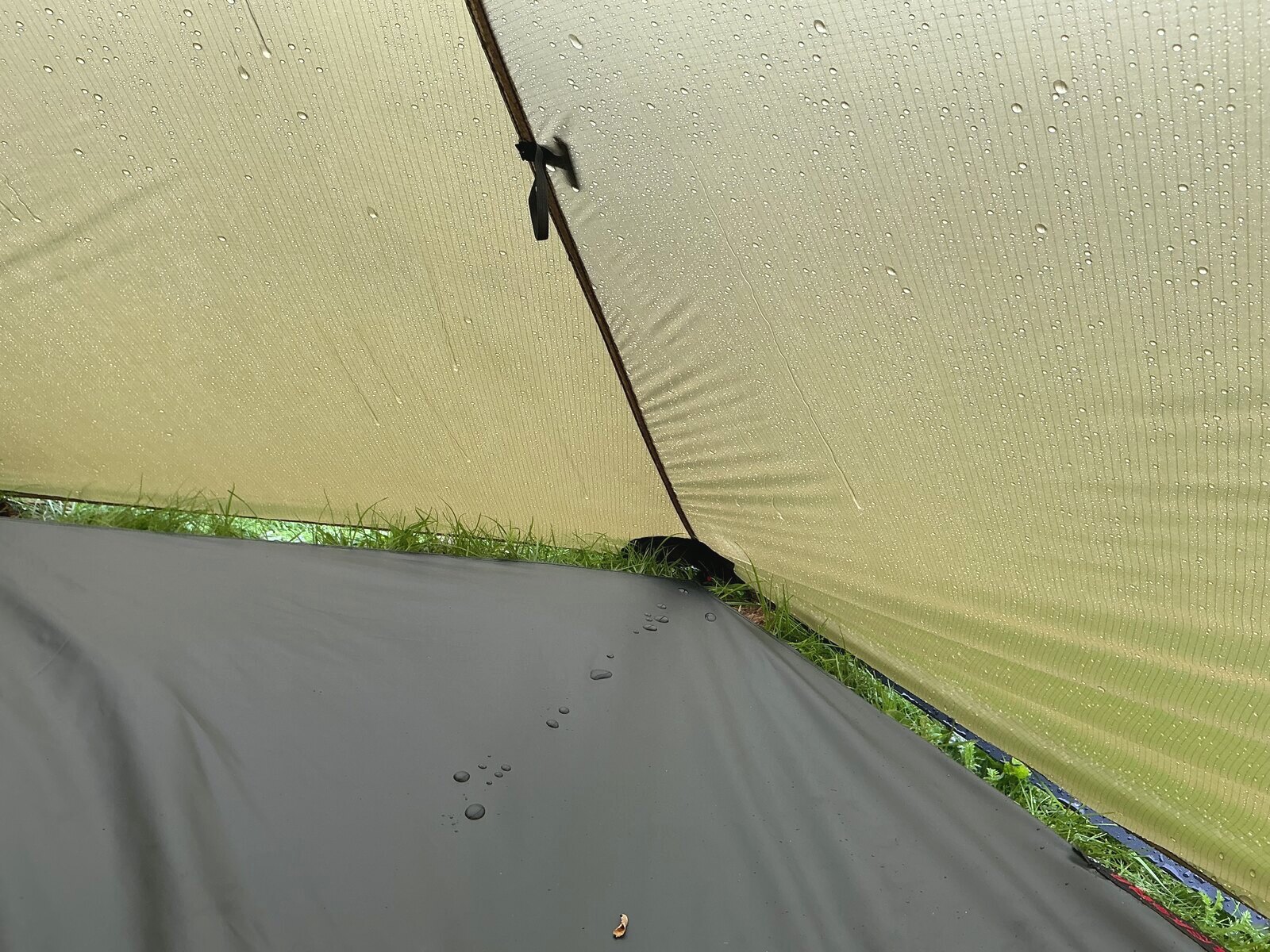
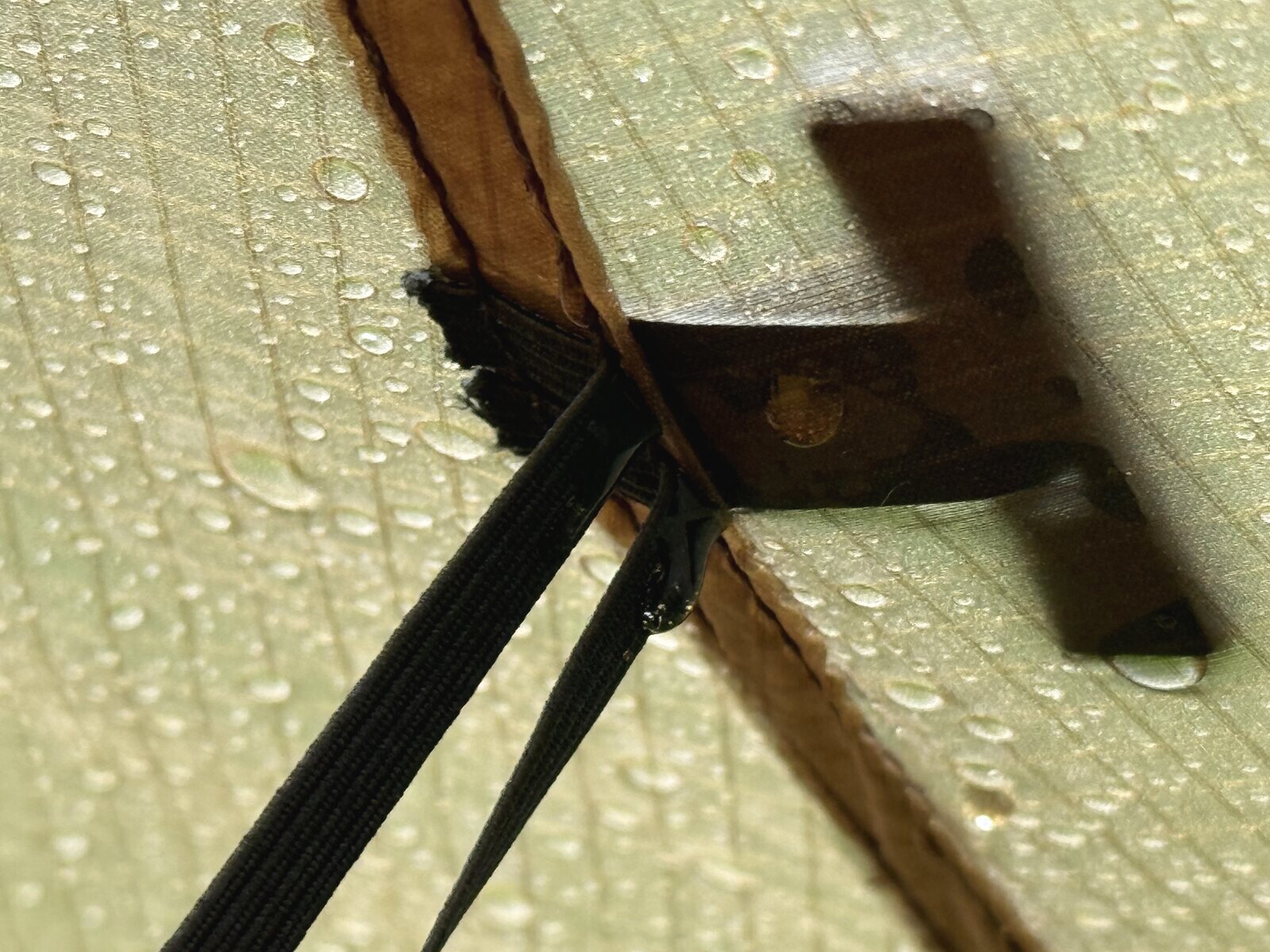
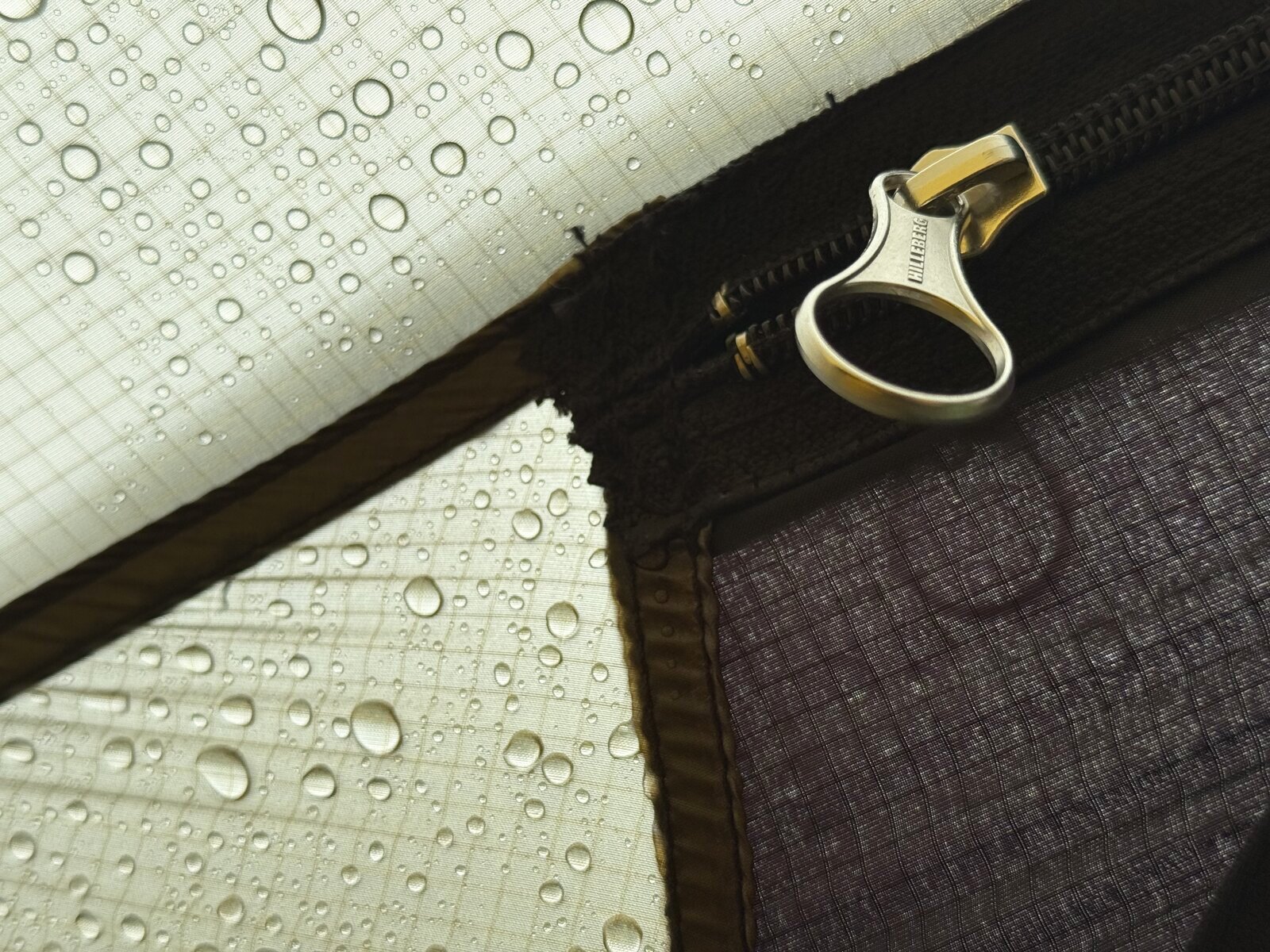
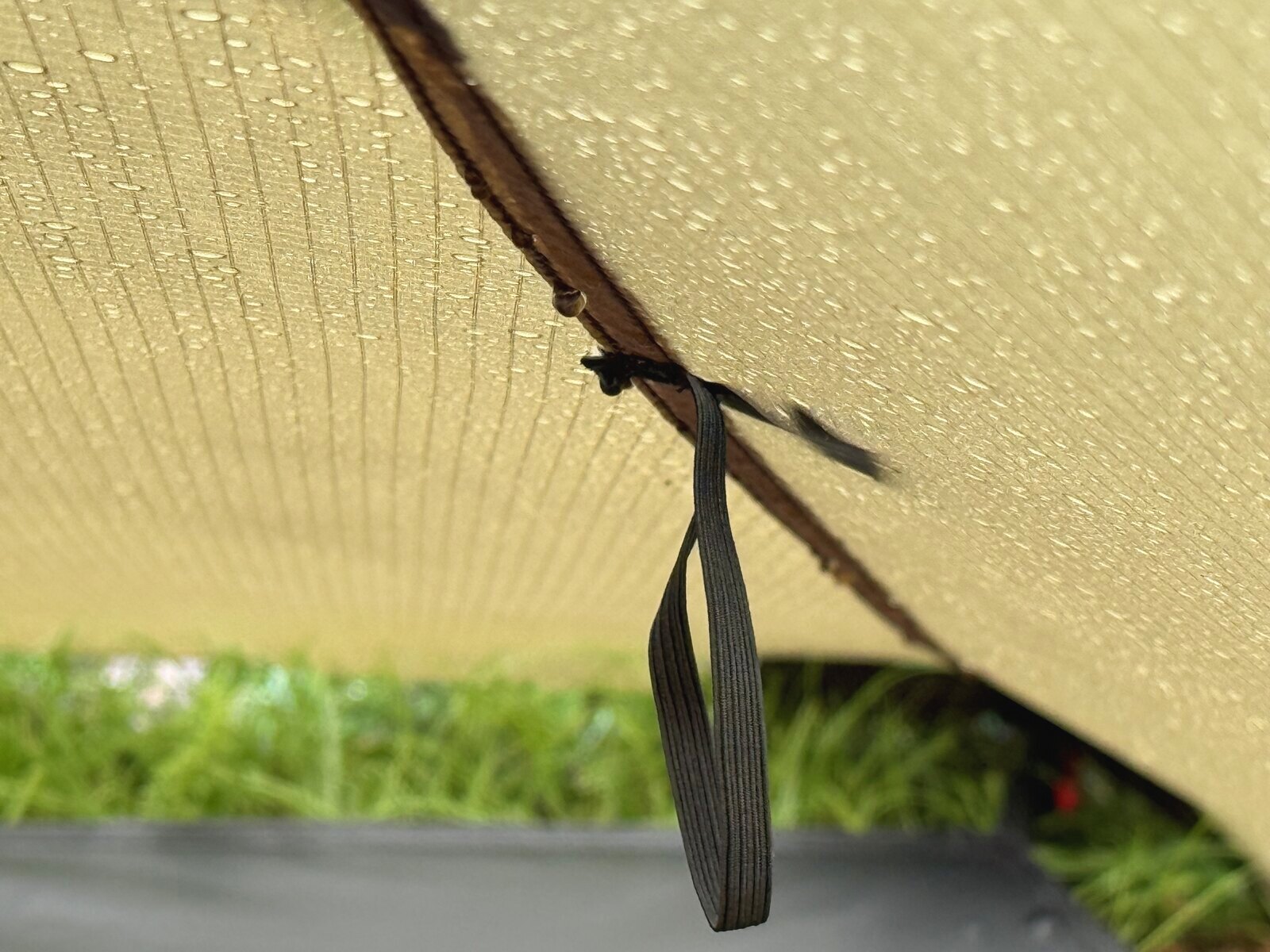
How the Saivo 4 and Kaitum 4 compare in everyday use, and what we like about both, is shown in our latest comparison video (in German): Hilleberg Saivo 4 & Kaitum 4 comparison on YouTube.
Soulo BL: survived the storm, seams slightly leaky
We bought our Soulo BL around May 2026. In the summer it came along on our big trip without any problems. In Scotland in October 2026 we had a storm and a great deal of rain: the tent stood firm, but a little water came through at practically every seam. It was not dangerous, just annoying. Chris called it “stalactite cave vibes”.
For comparison: our older Hilleberg tents
In 2026 alone we bought three Hilleberg tents: the Saivo 4, the Soulo BL and the Kaitum 4. All three leaked at the seams at first, and with the Kaitum 4 it was even two tents in a row. Our older Hilleberg tents are a completely different story: the Red Label Soulo (for many years) and our Allak 3 (from 2021 until we sold it in November 2026) have been in hard use, on countless trips and surely several hundred nights between them. Since 2025 we have also had the Niak, which we bought second-hand, so it is an older tent. With them, water has never come through the seams.
Chris’s thoughts: Honestly, I don’t think the seam sealing itself is the problem. My guess is that something has changed in manufacturing or in quality control. Hilleberg itself writes that materials and treatments keep evolving to meet environmental standards. At first I also thought it might mainly affect the large tents, but our new Soulo BL drips too. I can’t prove any of this – it’s simply my gut feeling after all those nights in tents.
Our conclusion
To be honest, we are disappointed. From Hilleberg we expect tents whose seams are watertight from the factory, and that is exactly why we were happy to spend a bit more money.
We are sad rather than angry. We love these tents and look forward to pitching them every single time. We are living with the Soulo BL as it is. For the Kaitum 4, Hilleberg again offered to treat the affected seams with seam sealer; customer service essentially replied along the lines of the FAQ.
To be fair: Hilleberg responded to our reports, sealed tents, sent us a new one and gave us Black Label poles as compensation. The resealed Saivo 4 has been watertight ever since. The tents are sturdy, and the Soulo BL came through a storm without trouble. Even so, some of our trust in their watertightness has gone, and we very much hope Hilleberg gets this back under control.
What Hilleberg itself says about seams
This is how Hilleberg describes its seams (all sources accessed on 20 November 2026):
- Current FAQ: In answer to the question “Do I need to seal the seams on my new tent?”, Hilleberg explains that its stitching method is designed to produce exceptionally durable, long-lasting and highly water-repellent seams. It goes on: “However, as materials and treatments continue to evolve to meet today’s environmental standards, their behavior can vary slightly. During prolonged periods of heavy rain or sustained wet weather, a small amount of moisture may occasionally work its way through a seam.” In such cases, Hilleberg recommends applying seam sealer to the affected spot for extra waterproofing. Source: Hilleberg FAQ (English version).
- Earlier version: The FAQ used to say: “You do not need to seam seal our tents as we use a stitching method that makes the seams really strong and durable. We use a flat fell-seam in all our tents.” That version is no longer online; we only know it from a search engine snippet.
- Four layers of fabric: According to a Hilleberg text quoted by a retailer, “every stitch goes through four layers of fabric, ensuring both strength and water resistance.”
- Fabric and poles: On the Saivo and Soulo BL product pages: “Kerlon 1800 outer tent fabric and 10 mm poles make for an exceptionally strong and stable tent.” (Saivo, Soulo BL). On the Kaitum page: “Kerlon 1200 outer tent fabric and 9mm poles make for a very lightweight yet supremely stable tent.” (Kaitum)
- Warranty: On its warranty page, Hilleberg offers a “lifetime warranty against defects in material and craftsmanship”, which explicitly “applies to North America only”.
- Condensation: An earlier Hilleberg FAQ (also only documented as a search snippet) said: “There is no such thing as a ‘condensation-proof tent.’” That is true; we know condensation from every tent. In our tents, however, the drops ran exactly along the seams when it rained, even during the day.
So Hilleberg acknowledges that in heavy rain a small amount of water can occasionally get through a seam, and recommends seam sealer in that case. What we experienced was more than that: the Saivo 4, two Kaitum 4 tents and the Soulo BL dripped along the seams, the Saivo 4 already in ordinary rain in the garden. For the Saivo 4, Hilleberg named the production batch as the cause and offered Seam Seal and a replacement outer tent. With a premium tent, we would still have liked seams that are watertight from the factory. We do not know how many other tents are affected. We can only report on our own tents, so please judge for yourself.
Condensation or a leak? How to tell the difference
General advice, not specific to Hilleberg:
- Condensation forms mainly at night when it is cold, damp and still and people are breathing inside the tent. It is usually spread fairly evenly over the whole inside of the outer tent.
- A leak usually shows up in specific places: along seams, at guy points, pole sleeves or zips. Drops form rows there or collect on the floor underneath.
- A simple test: pitch the empty tent during the day in the rain, ventilate it well and then check inside. If it drips at the same seams again, condensation is an unlikely cause.
Possible causes in general
We cannot judge what caused the problem in our tents; only the manufacturer knows that. In general, these are the most common reasons a tent leaks:
- Seams that are not sealed, or not fully sealed (seam tape or seam sealer)
- Needle holes that do not close up by themselves with certain fabrics and stitching methods
- Pitching: a slack outer tent touching the inner tent, or water running inside along guylines and poles
- Age, wear and care, for example a deteriorating coating or UV damage
Tips on prevention and seam sealing
General advice:
- Pitch a new tent at home in the rain once and check it before your first big trip.
- Pitch the outer tent taut so it does not touch the inner tent, and keep the vents open.
- Document leaks straight away with photos, the date and the weather, and report them to the manufacturer before you change anything yourself.
- Before sealing seams, ask the manufacturer which product suits the tent fabric. Not every seam sealer sticks to every coating, and your own repairs may affect warranty claims.
- Only store the tent dry and remove dirt gently with water.
Photos: our own, the Saivo 4 in February 2026 and the Kaitum 4 in September 2026, both in the garden in the rain; the Soulo BL in October 2026 in Scotland.